UKCharityCamp 26: what we talked about, and why it matters

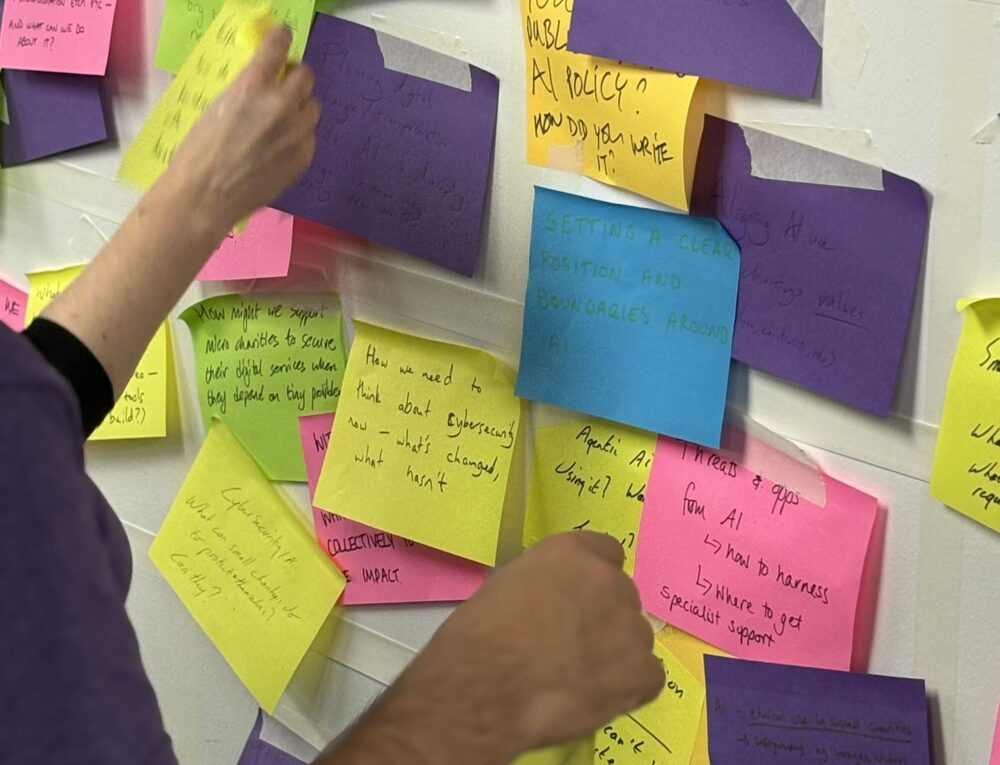
People weren’t asking what AI is. They were asking how to use it well, and when not to.
On 5 November, folks from across the third sector came to Birmingham for UKCharityCamp 2026. We had 6 rooms and 5 time slots. That’s 30 conversations, each one suggested by someone in the room on the day.
At the end of each session, we asked people to write down their main thoughts. We’ve summarised those post-its here, along with the notes some of you shared (thank you). It’s not a complete record. But together, they show a sector that’s curious, practical, and keen to learn from each other.
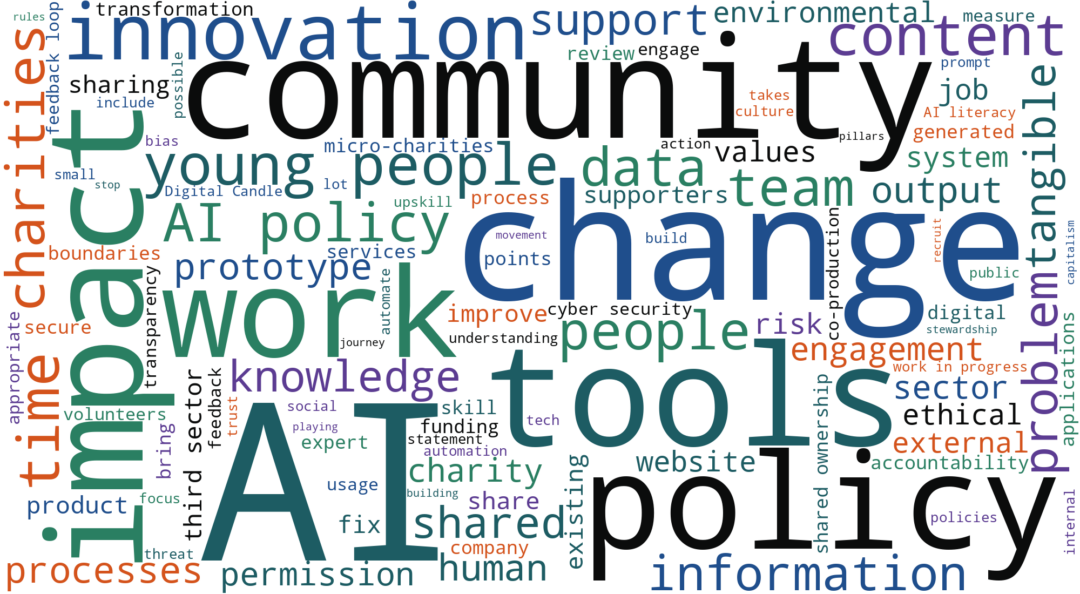
Community is something you build
Community came up again and again, with a reminder that it means different things to different organisations, so define it for you. Put the foundations in place, and plan how you’ll look after people, before you start recruiting.
The session on engaging young people had the same message. Involve them from the start. Close the feedback loop by telling them what changed because of what they said. Make co-production worth their while.
Micro-charities asked how to keep digital services secure when they depend on tiny suppliers, and asked for cyber security training aimed at them. Underneath it all was one message: charities need to share what they know. That’s what a day like UKCharityCamp is for.
AI: the questions have grown up
Harry’s rough count of AI sessions on the grid went from 5 in 2023 to 18 this year. The growth is slowing and the questions are deeper. People weren’t asking what AI is. They were asking how to use it well, and when not to.
Groups talked about moving from individual experiments to shared practice. That means spaces to swap what works, safe experimentation rather than policing, and humans staying accountable for the output.
The “last mile” was a big worry. Smaller charities can now build AI-assisted prototypes quickly, but turning them into secure, sustainable services is much harder. One group flipped the question: point AI at the legacy backlog, and free up headspace for the new stuff.
The AI policy session was full of practical advice:
- start with a public statement of how you use AI, then write the policy through that lens
- build on your existing values and adjacent policies
- assume it will change, and review it regularly
Charities with environmental goals face real tension. With little transparency from the industry, the advice was to be “eco-imperfect” and say that. A work-in-progress policy beats a perfect one that takes years.
The sharpest post-its were about systems, not tools. Funding processes were called a “busted flush”, with AI-written applications possibly assessed by AI. AI-written job applications are swamping recruiters.
The post-it that stuck with many of us was this one: the output is not the outcome. AI can write your workshop report, but working through a problem together is how people learn.
Not everything is about AI
One flipchart was headed “Innovations which aren’t AI”. Innovation needs time, permission and culture, including permission to fail. It’s relative to the size of your charity. And it can be small daily actions rather than big changes.
The automation session agreed that what you automate matters more than how. Map the user journey and find the pain points first. Start with the tools you already have. Fixing a broken process may do more good than digitising it. When you do need tech advice, Digital Candle offers it free to charities.
A session on balancing speed, transformation and health put people first. Bring them with you with genuine shared ownership of goals and empowerment. And don’t underestimate how resistant people are to change.
Websites, content and impact
For charities that give advice, AI search was seen as a threat. If people get answers from an AI summary, they may never see your site or your brand. One group suggested a website is only an assumption about how people want to find information. Their answer was to put content where people now look, build a brand people trust wherever they meet it, and keep faith in quality.
The website audit session had practical tips. Use free tools like Hotjar and Microsoft Clarity. Plan your redirects, because cool URLs don’t change. Search your content every January for “this year”.
People talked about how to measure impact. Social value counts, not just figures. Define your social impact measures, think long term, and remember that going viral rarely reflects real impact. Impact reports written for funders can be reused to show your work to beneficiaries and staff, and they’re a good motivator for teams too.
The open question was the “impact cascade”: the knock-on effects that are hard to see and harder to count. Nobody had found one place to track impact across every channel. If you have, people would love to hear from you.
Why a day like this matters
UKCharityCamp is free, open, and the agenda belongs to whoever turns up. For almost every question, someone in the room has been there. People called the day inspiring and rejuvenating.
Two suggestions we’ll think about: rotating the venue, and streams so content, social and fundraising sit alongside tech and AI.
Thanks to everyone who came, suggested a session, facilitated or wrote on a post-it. Thanks too, to our sponsors: UKGovCamp, Zoonou, Poteris, Nexer Digital, ProMo Cymru, CAST, Radiate Hiring and Tilt.